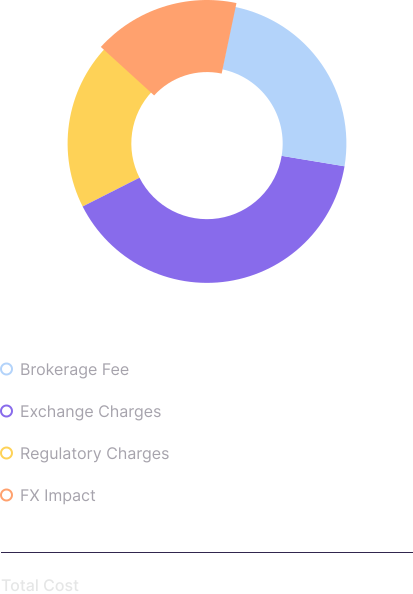
Para trader dapat dengan cepat dan akurat mengevaluasi keuntungan dari transaksi mereka menggunakan kalkulator untung rugi.
Apa itu Kalkulator Laba Rugi?
Kalkulator untung rugi adalah alat keuangan yang menghitung laba bersih atau rugi dari suatu transaksi berdasarkan data yang dimasukkan oleh trader, termasuk harga masuk, harga keluar, jumlah, dan biaya transaksi. Alih-alih menghitung hasil transaksi secara manual, para trader menggunakan kalkulator untung rugi untuk langsung mengevaluasi hasil transaksi mereka, terlepas dari jenis aset yang diperdagangkan.
Banyak pedagang menggunakan a kalkulator untung rugi yang dipadukan dengan alat penentuan ukuran posisi. Alat penentuan ukuran posisi membantu para trader mengendalikan risiko dengan menentukan ukuran posisi yang tepat berdasarkan modal yang tersedia.
Cara Kerja Kalkulator Laba Rugi
Kalkulator untung rugi daring membandingkan harga beli dan harga jual suatu aset serta menghitung total biaya transaksi (termasuk biaya broker, komisi, dan sebagainya). Kalkulator tersebut kemudian mengalikan selisih harga dengan jumlah unit atau saham yang diperdagangkan, lalu menghitung hasilnya.
Pertanyaan mendasar yang ingin dijawab oleh kalkulator ini adalah:
- Apakah ada keuntungan atau kerugian dari aktivitas perdagangan tersebut?
- Berapa banyak uang yang saya dapatkan atau rugi?
- Berapa tingkat pengembalian investasi untuk transaksi ini?
Tanggapan instan ini akan memungkinkan Anda untuk segera mengevaluasi strategi trading Anda, apakah strategi tersebut efektif atau tidak. Alih-alih menghitung setiap transaksi secara manual, manfaatkan alat trading cerdas yang tersedia secara online untuk menganalisis keuntungan, kerugian, dan potensi imbal hasil secara instan sebelum mengambil langkah selanjutnya.
Cara Menggunakan Kalkulator Laba Rugi
Penggunaan kalkulator untung rugi sangat mudah dan dirancang agar para trader dapat melakukan perhitungan dengan cepat dan mudah:
- Masukkan harga saat Anda membeli (harga beli) aset tersebut.
- Kemudian, Anda perlu memasukkan harga saat Anda menjual (harga penutupan) aset tersebut.
- Selanjutnya, masukkan jumlah aset yang diperdagangkan.
- Jika ada biaya tambahan (seperti biaya broker jika Anda bertransaksi melalui broker), tambahkan juga biaya-biaya tersebut.
- Setelah Anda memasukkan semua informasi ini, cukup klik tombol "Hitung".
Total keuntungan atau kerugian Anda akan ditampilkan secara otomatis, serta, dalam beberapa kasus, persentase imbal hasilnya.
Data yang Diperlukan untuk Perhitungan Laba Rugi
Untuk mendapatkan hasil yang akurat dari kalkulator laba rugi online, diperlukan data berikut:
| Input Parameter | Deskripsi |
|---|
| Harga Awal | Harga di mana aset tersebut dibeli atau dijual. |
| Harga Penutupan | Harga saat posisi ditutup. |
| Jumlah | Jumlah unit yang diperdagangkan. |
| Jenis Perdagangan | Beli/Jual atau Long/Short. |
| Biaya | Biaya broker, pajak, atau biaya lainnya (opsional). |
Data masukan yang akurat menjamin hasil yang dapat diandalkan, terutama bagi para pelaku perdagangan dengan frekuensi tinggi atau volume besar.
Rumus Perhitungan Laba Rugi
Rumus dasar kalkulator laba rugi adalah:
Laba atau Rugi = (Harga Jual − Harga Beli) × Jumlah − Total Biaya Transaksi.
Contoh:
Harga Beli = $100 per saham.
Harga Jual = $120 per saham.
Jumlah yang diperdagangkan = 50 saham.
Total Biaya Transaksi (komisi, biaya, dll.) = $200.
- Langkah 1: Perbedaan Harga
₹120 − ₹100 = ₹20
₹20 × 50 = ₹1.000
₹1.000 − ₹200 = ₹800
Transaksi tersebut menghasilkan laba bersih sebesar ₹800 setelah memperhitungkan semua biaya transaksi.
Rumus yang digunakan pada kalkulator canggih dapat bervariasi, terutama saat menghitung posisi penjualan kosong atau perdagangan derivatif, karena perhitungannya bergantung pada jenis posisi yang dimasukkan.
Beberapa kalkulator canggih akan menghitung persentase pengembalian sebagai berikut:
Persentase Laba Rugi = (Laba atau Rugi ÷ Total Investasi) × 100
Laba Rugi untuk Berbagai Jenis Transaksi
Laba dan rugi bervariasi di antara perdagangan spot, intraday, dan derivatif karena perbedaan harga dan biaya, yang kalkulator laba rugi online membantu menghitung dengan akurat.
Transaksi Jual Beli
Ketika Anda membeli sekuritas, Anda memperoleh keuntungan dengan menjualnya pada harga yang lebih tinggi daripada harga belinya.
Ketika Anda melakukan short selling atas suatu instrumen keuangan, keuntungan akan diperoleh jika harga saat Anda menutup posisi tersebut lebih rendah daripada harga saat Anda pertama kali menjual aset tersebut.
Kalkulator untung rugi daring memungkinkan Anda mengevaluasi berbagai transaksi dengan mudah dan mengidentifikasi strategi perdagangan yang menguntungkan.
Posisi Long dan Short
Ketika Anda membuka posisi beli, Anda akan memperoleh keuntungan jika harga aset tersebut naik setelah Anda membelinya.
Ketika Anda membuka posisi jual, Anda akan memperoleh keuntungan jika harga aset tersebut turun setelah Anda menjualnya terlebih dahulu.
Menghitung untung rugi dari transaksi short selling bisa jadi rumit, itulah sebabnya banyak trader mengandalkan kalkulator untung rugi otomatis.
Mengapa Perhitungan Laba Rugi Itu Penting
Kesuksesan jangka panjang dalam trading membutuhkan kemampuan untuk melacak keuntungan dan kerugian secara akurat. Menurut penelitian di industri ini, lebih dari 70% trader ritel pada akhirnya gagal dalam trading. Hal ini disebabkan oleh manajemen risiko dan modal yang buruk, bukan karena kurangnya pemahaman tentang pasar.
Penggunaan kalkulator laba rugi merupakan salah satu cara untuk mengatasi masalah ini, dan manfaatnya dapat dirasakan melalui penggunaannya sebagai berikut:
- Mendorong penerapan strategi perdagangan tertentu (disiplin perdagangan).
- Memberikan dukungan untuk pengelolaan uang dan risiko yang lebih baik.
- Memungkinkan penilaian efektivitas strategi perdagangan.
- Mengurangi kemungkinan melakukan transaksi berdasarkan emosi.
- Memudahkan perhitungan pajak dan pengelolaan catatan.
Penggunaan kalkulator laba rugi online membantu para trader memahami dengan jelas kinerja mereka dari waktu ke waktu.
Keterbatasan Kalkulator Laba Rugi
Meskipun kalkulator untung rugi dapat memberikan bantuan yang berharga dalam mengambil keputusan trading, ada beberapa keterbatasan dalam penggunaannya:
- Selisih harga di pasar biasanya tidak diperhitungkan oleh kalkulator ini.
- Dampak langsung dari volatilitas pasar juga tidak pernah diperhitungkan.
- Faktor-faktor emosional dan psikologis tidak diukur.
- Ketepatan sepenuhnya bergantung pada keakuratan data masukan.
Oleh karena itu, meskipun kalkulator merupakan alat yang sangat berguna untuk mendukung keputusan trading Anda, alat ini tidak boleh digunakan sebagai strategi trading yang berdiri sendiri.
Kesimpulan
Kalkulator untung rugi adalah alat yang sangat berguna bagi para trader. Alat ini membantu Anda dengan cepat mengetahui seberapa besar untung atau rugi yang Anda peroleh dari suatu transaksi. Hal ini menghemat waktu dan mencegah terjadinya kesalahan. Ketika Anda memahami hasil transaksi dengan jelas, akan lebih mudah bagi Anda untuk meningkatkan kualitas trading dan mengelola risiko. Alat ini juga membantu Anda tetap tenang dan mengambil keputusan yang lebih baik, alih-alih bertindak berdasarkan emosi. Meskipun memiliki beberapa keterbatasan, alat ini tetap sangat berguna untuk aktivitas trading sehari-hari. Platform seperti Dealing.com menyediakan alat yang memudahkan Anda melacak transaksi dan merencanakan strategi dengan lebih baik.